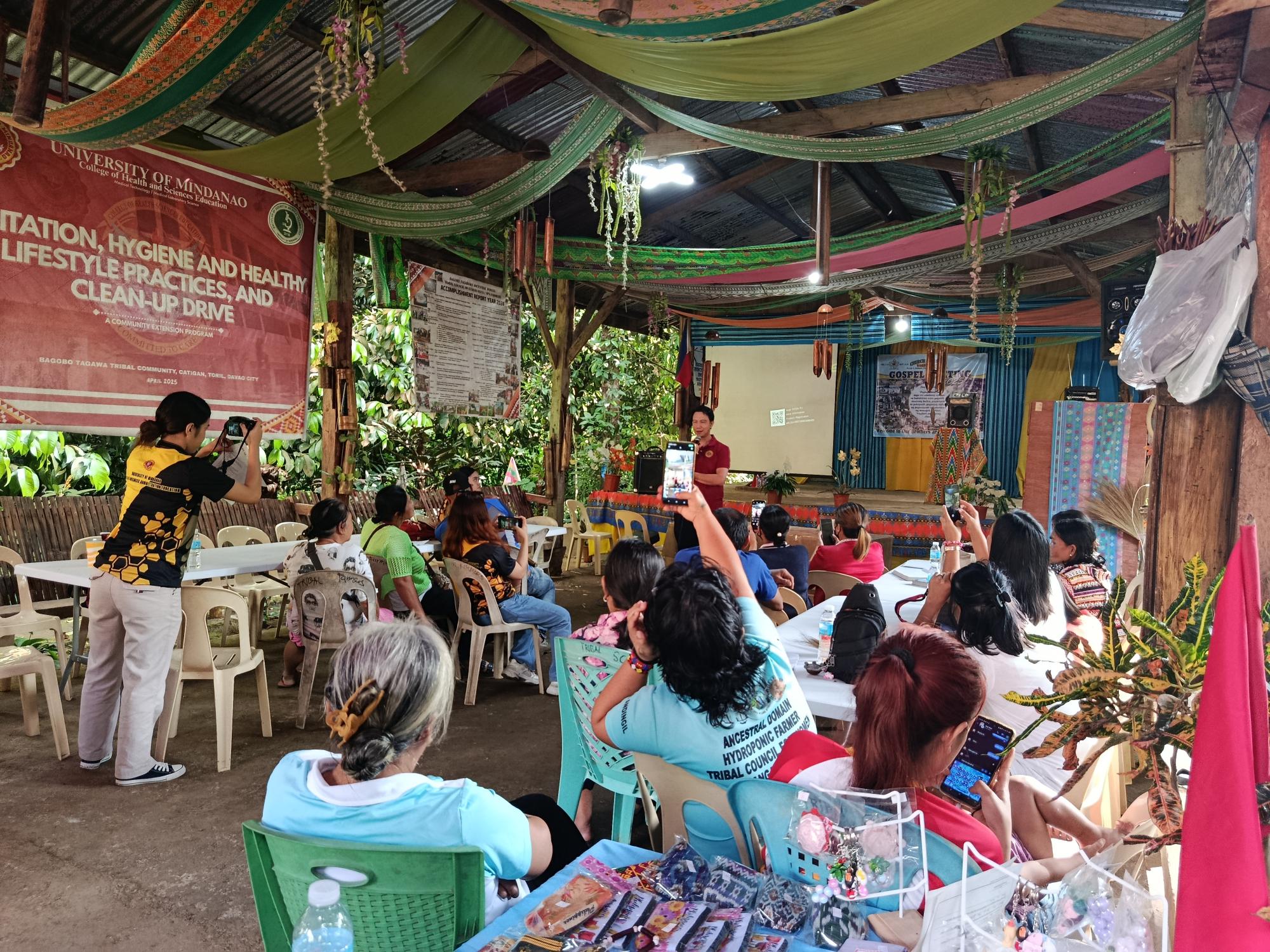
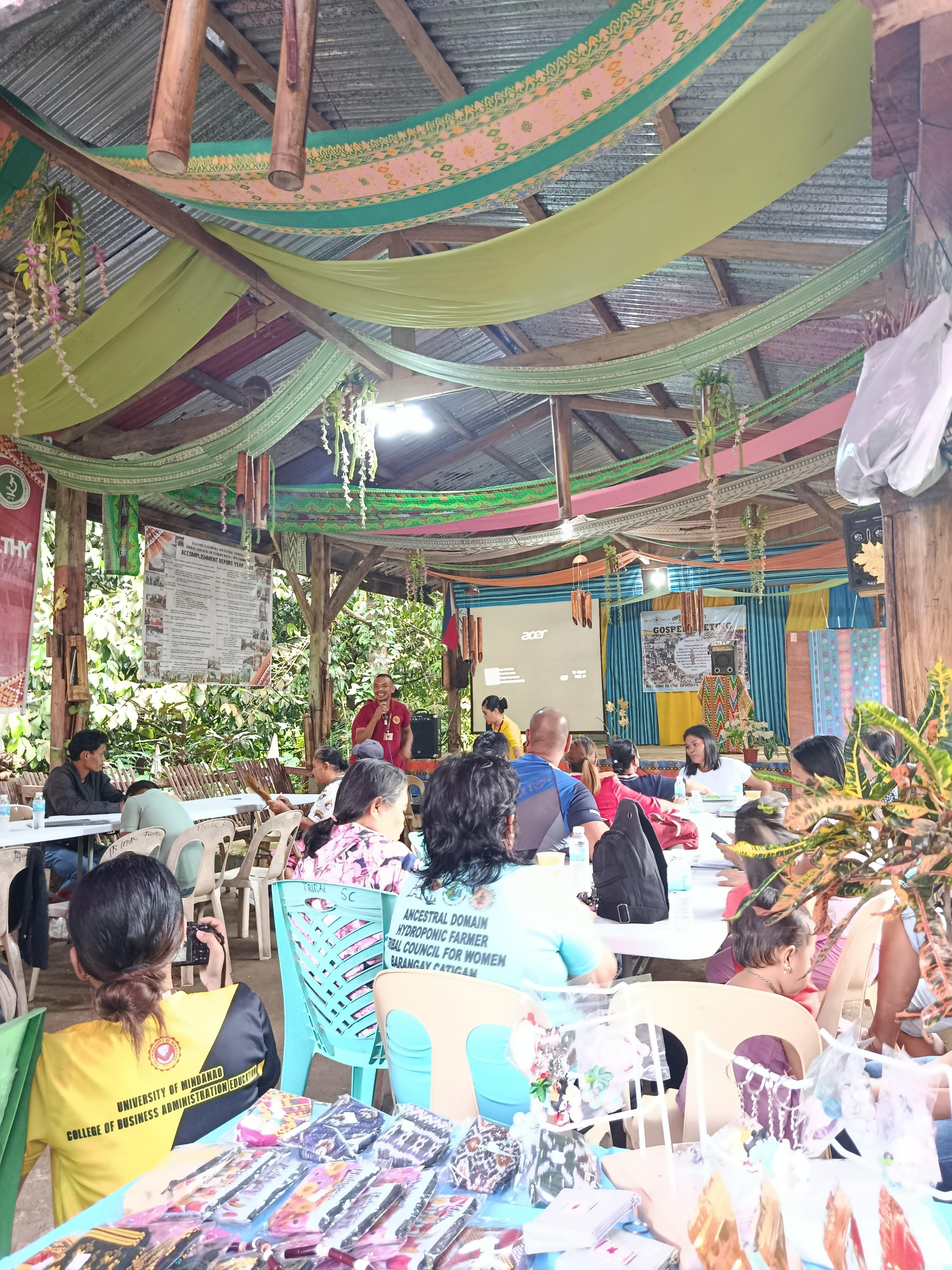
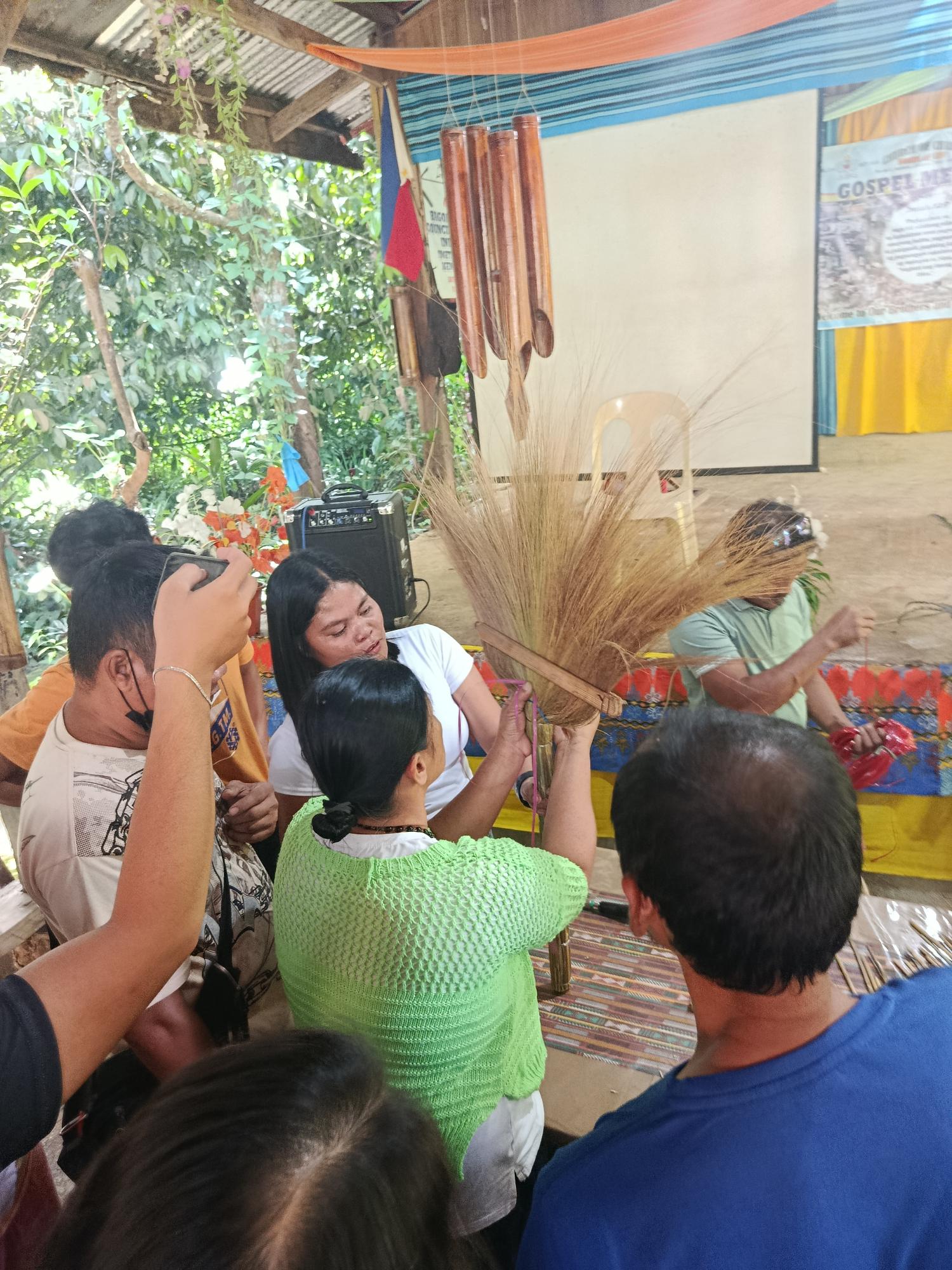
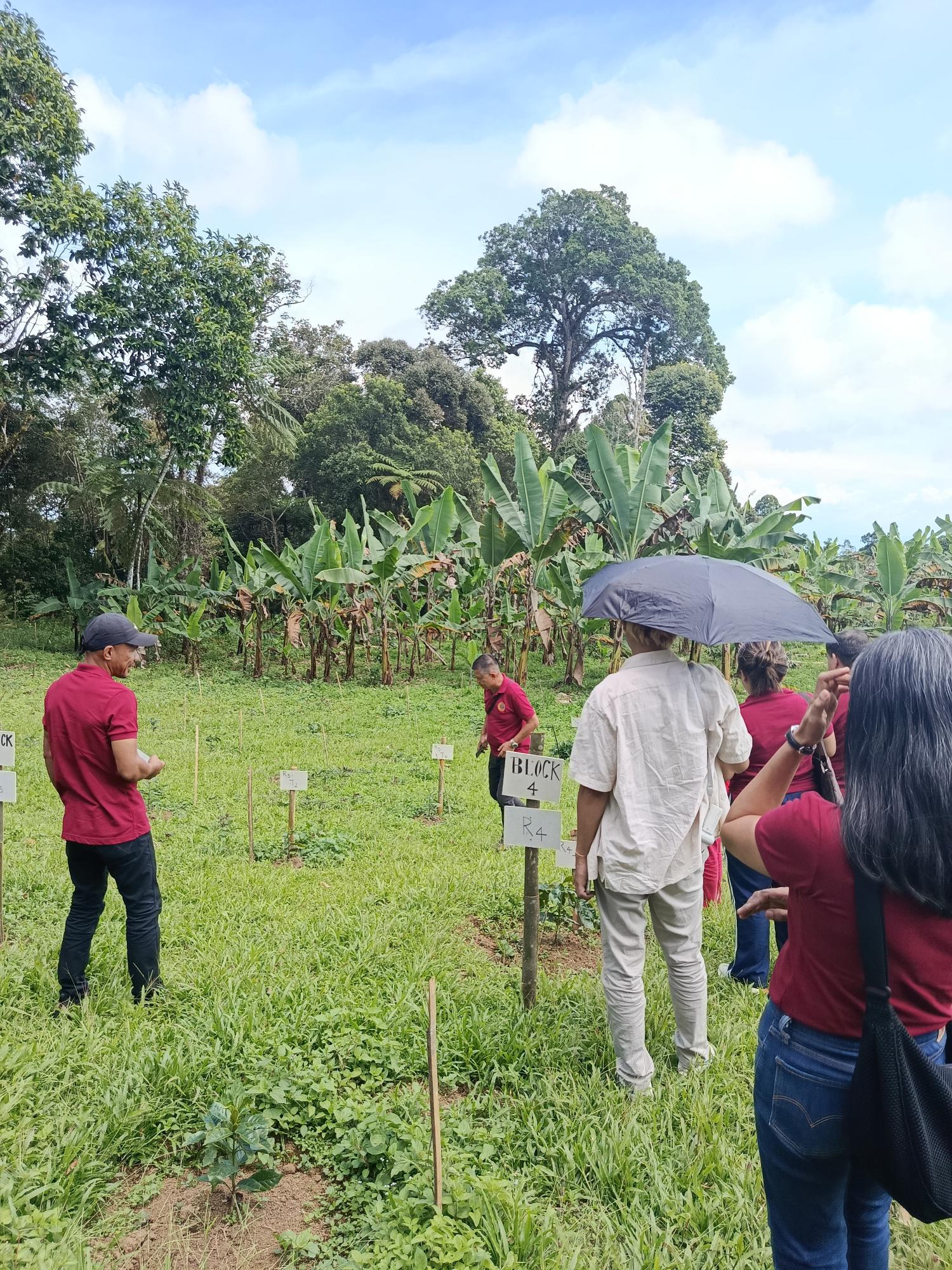
On December 3, 2025, the College of Business Administration Education (CBAE) in partnership with the Department of Trade and Industry (DTI XI) successfully conducted the activity titled “Product Quality Control for Agricultural Empowerment: Quality Craft, Quality Crops – A Seminar-Workshop on Practical Quality Control for Community Handicrafts and Farm Produce”. The said community extension initiative is under the banner program of the college dubbed as HADUM or Halad Alang sa Dunang Mindanawon focused on business enterprise mentorship to communities.
The seminar-workshop was participated in by the Bagobo Tagabawa Farmers and Artisans in Barangay Catigan, Davao City. It was designed to strengthen the quality-control capabilities of the community, whose livelihoods primarily depend on weaving traditional handicrafts, including clothing, bracelets, and brooms, as well as vegetable farming. While recognized for their craftsmanship and agricultural expertise, the community has faced challenges in accessing broader markets due to the lack of standardized quality-control practices. Through practical demonstrations and capacity-building sessions, the seminar-workshop equipped participants with essential quality control techniques to improve product quality, reduce production losses, enhance market competitiveness, and create more sustainable livelihood opportunities.
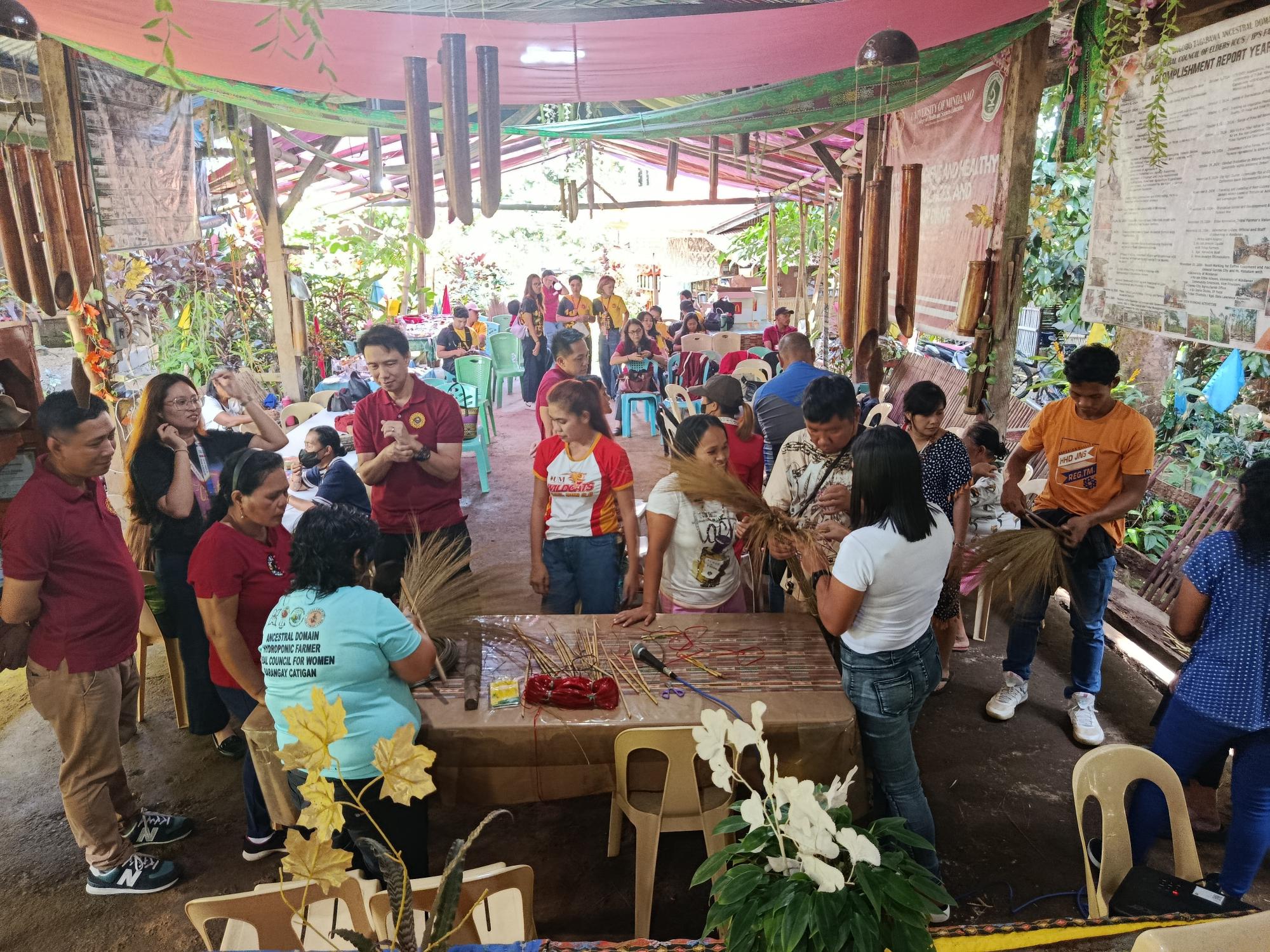
A key highlight of the session was the product quality control workshop facilitated by 6 DTI Region XI technical experts and partner artisans, led by Bae Joan A. Mando-on, IPMR of the Obu Manuvu Tribe in Barangay Carmen, Davao City, and Bae Nilda Landim, Tribal Chieftain of the same tribe. The workshop featured a demonstration of the Obu Manuvu Tribe's traditional broom-weaving techniques, enabling the Bagobo-Tagabawa artisans to learn quality production practices that can be adapted to improve their handcrafted products.
Concurrently, Mr. Arciel L. Flores Jr. of the University of Mindanao's Environmental Studies Department under the College of Arts and Sciences Education, together with the tribal farmers, assessed the community's coffee plantation in Upper Catigan Ancestral Domain Area. Drawing on his expertise in biodiversity assessment, flora inventory, and upland vegetation, he also shared practical guidance on vegetable sorting and grading, post-harvest handling, and storage practices, reinforcing the role of quality control in improving agricultural productivity and market readiness.
With the participation of 29 faculty members, staff,
and student volunteers alongside 11 Bagobo Tagabawa farmers, artisans, and
tribal leaders, the activity served as a platform for knowledge exchange on
quality control and value addition for indigenous handicrafts and agricultural
products. The integration of technical expertise with the community's
traditional craftsmanship reinforced quality-driven production practices that
can enhance product competitiveness, improve income-generating opportunities, create
employment, and contribute to poverty reduction in line with the United Nations Sustainable
Development Goals 1 on No Poverty and 8 on Decent Work and Economic Growth.
Share this article
.png)
.png)